Which is fattier, guanciale or pancetta?
Among the most beloved cured meats in Italian tradition, guanciale and pancetta compete for a place of honor in the kitchen. Both are made from pork, and both are tasty, but when it comes to comparing their fat content, a very common question often arises: which is fattier, guanciale or pancetta? In this article, we explore the topic of fat, guanciale, and pancetta in detail, comparing percentages, fat quality, uses, and digestion.
Where they come from: different cuts, different structures
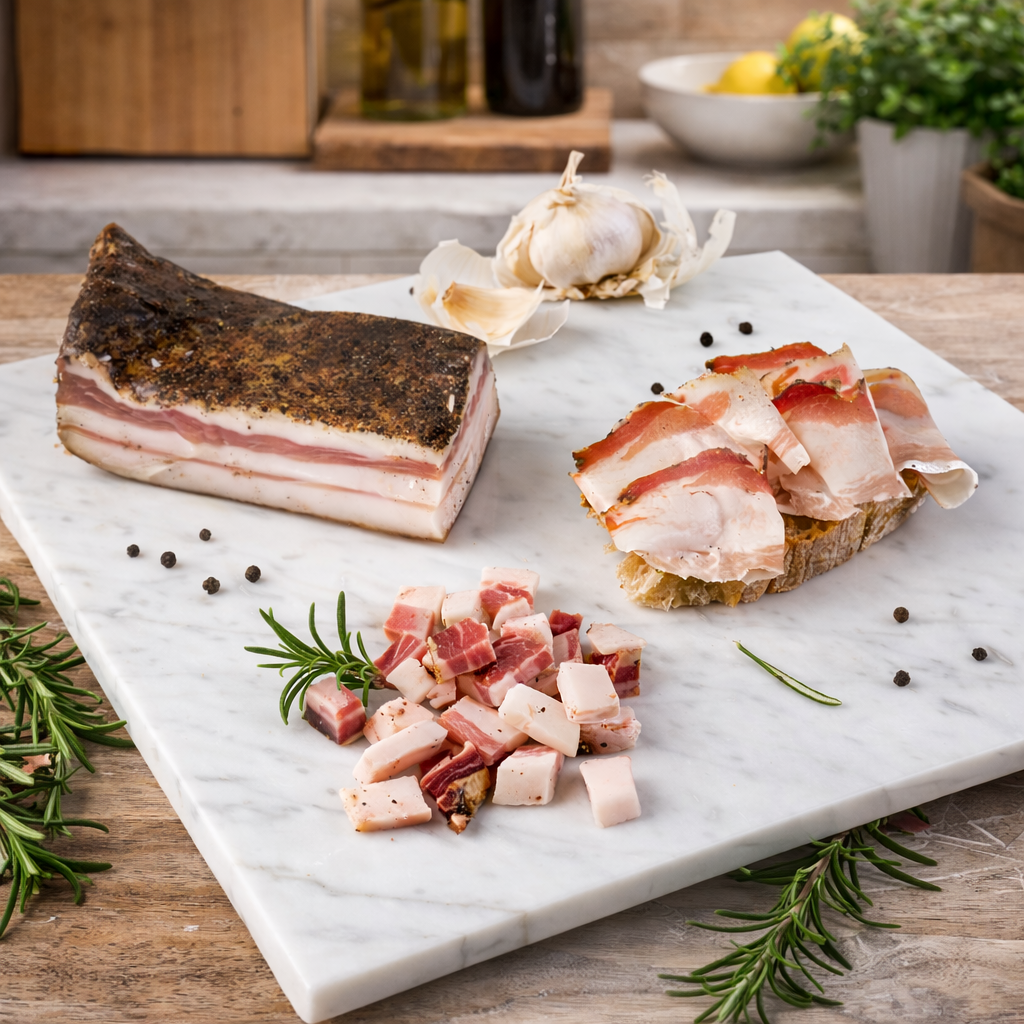
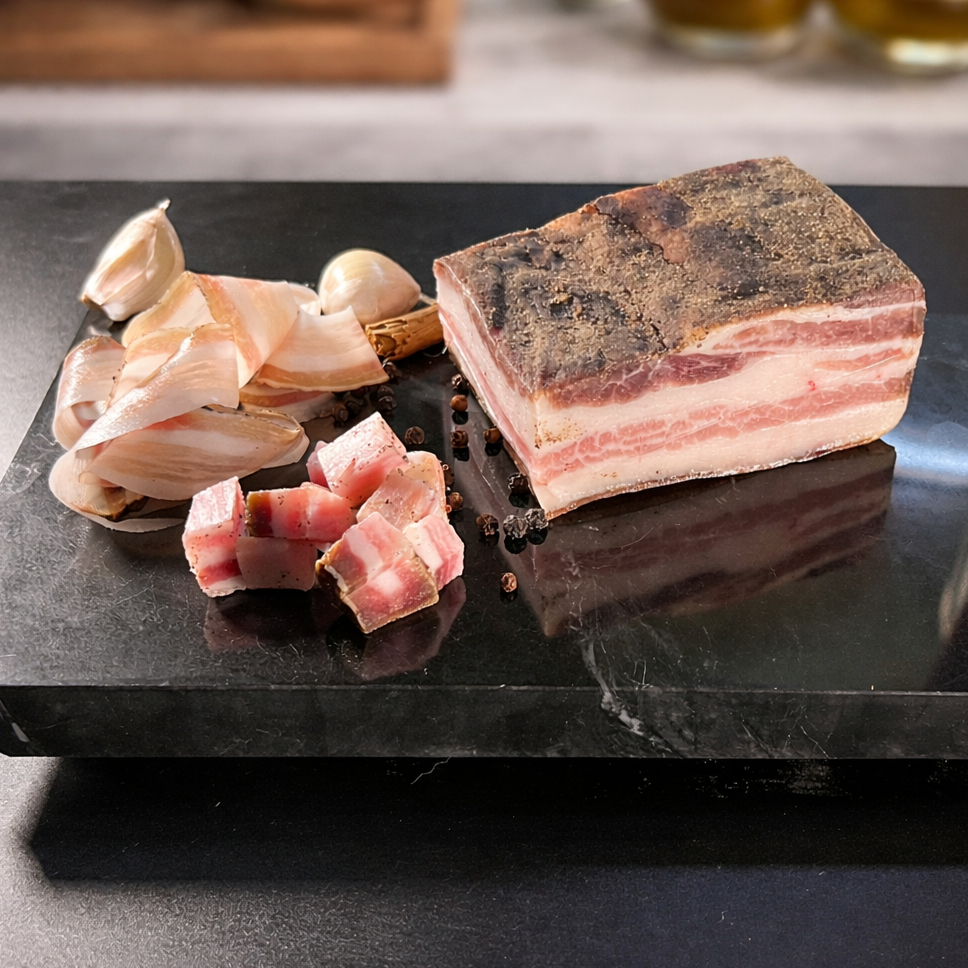
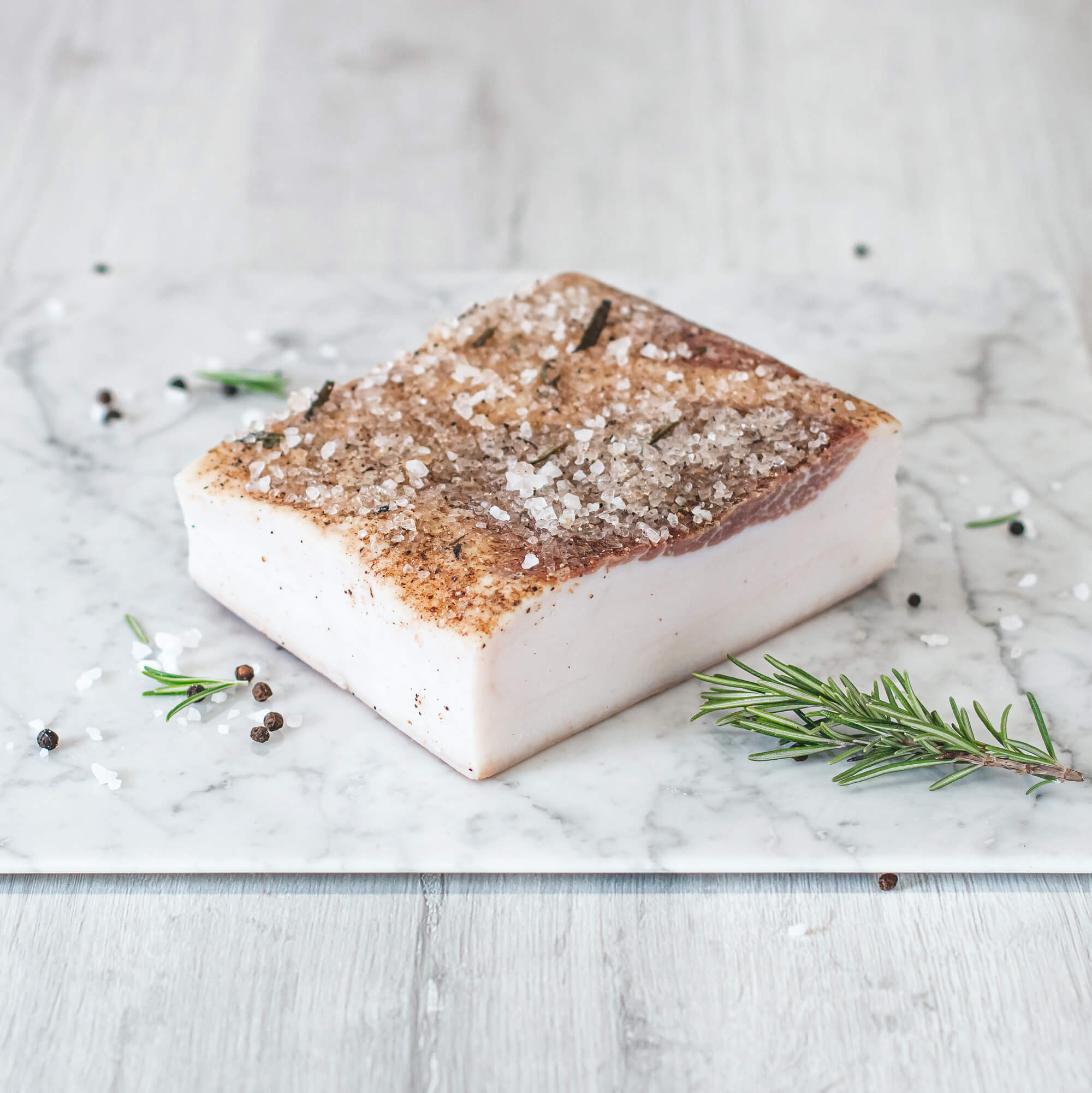
Sliced guanciale is obtained from the pig's cheek, an area naturally rich in fat. Pancetta, on the other hand, comes from the belly, a larger and more varied cut that includes both muscle and adipose tissue. This anatomical difference is enough to indicate that guanciale contains a higher percentage of fat , often over 70%, while pancetta is around 50-60%, varying depending on the type.
If you want to learn more about the different variations of pancetta, we recommend reading our in-depth article on all types of pancetta : stretched, rolled, smoked, coppata, cured, and even vergazzata.
Visible fat and “hidden” fat
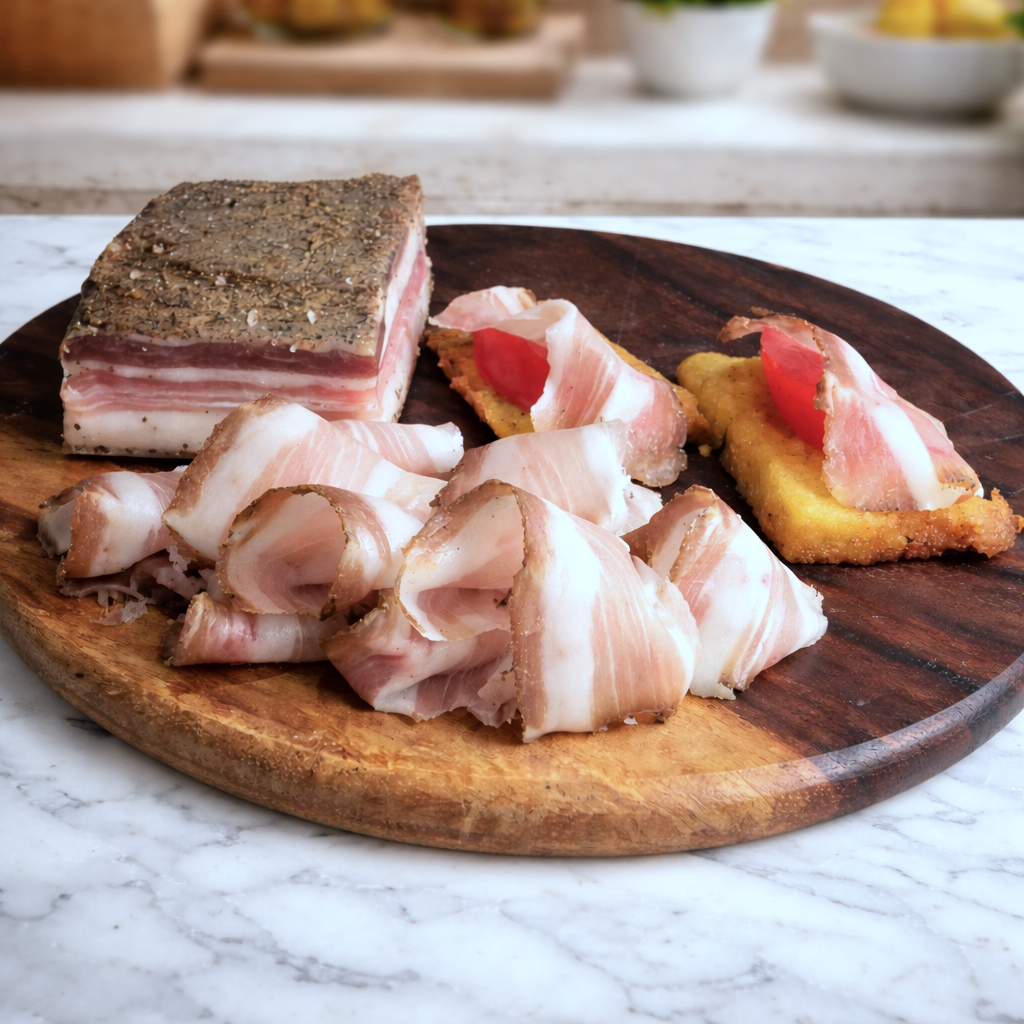
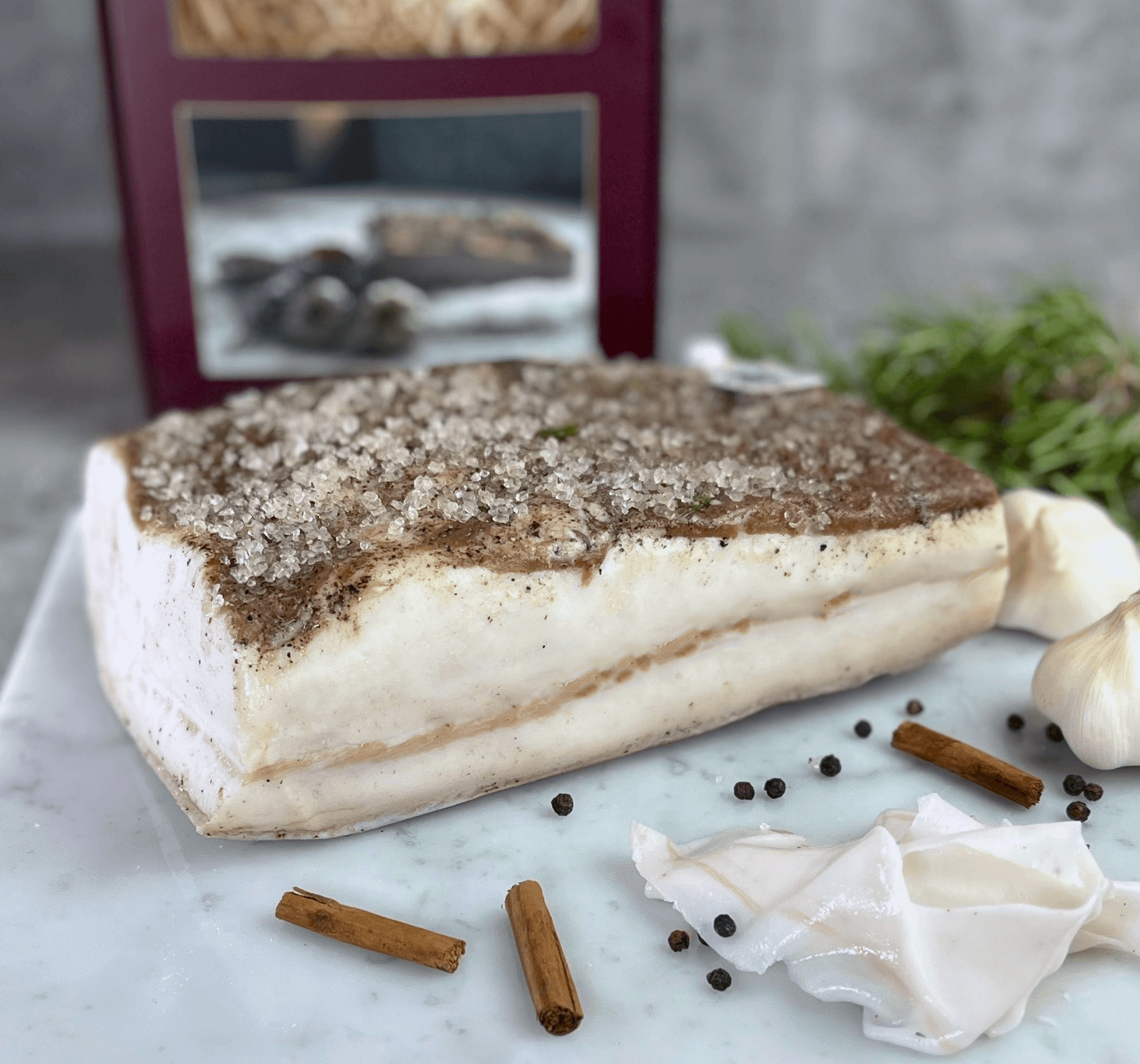
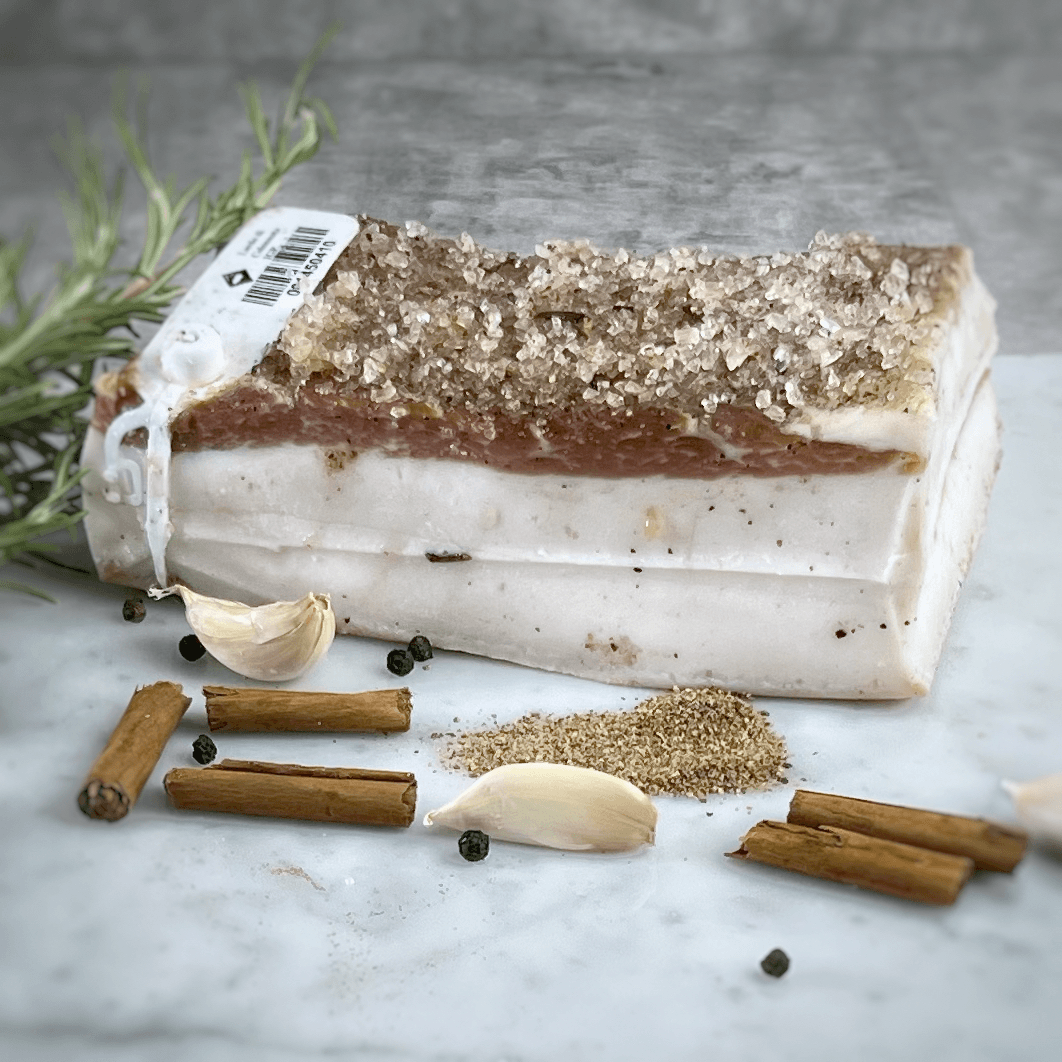
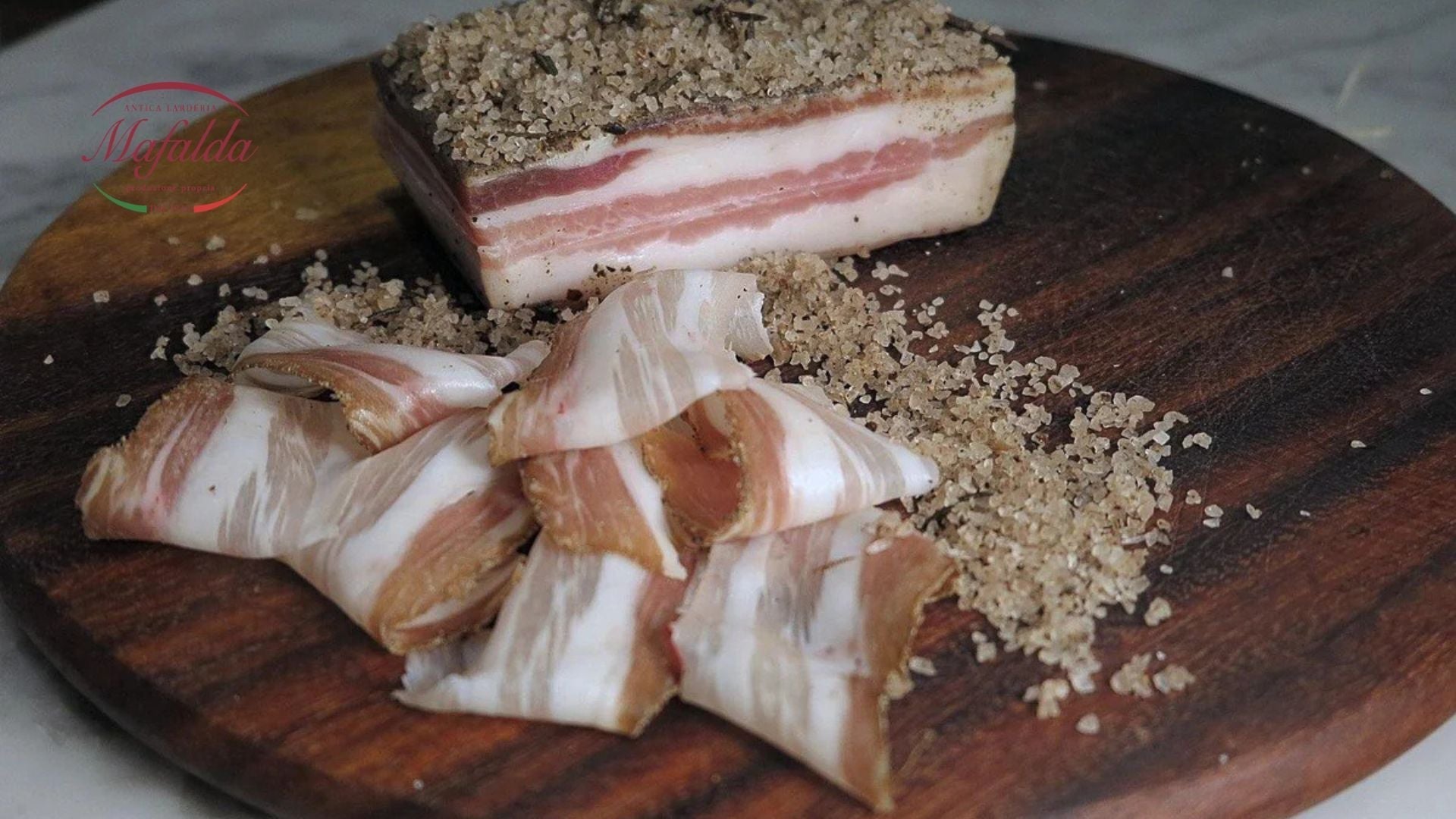
When discussing "how much fat is in a cured meat," it's important to distinguish between actual fat percentage and visual perception . Guanciale has a more uniform structure: it appears almost entirely as a block of fat with very little muscle tissue. Pancetta , especially the cured variety, on the other hand, displays a visible alternation between white parts and red veins , making it more "balanced" to the eye.
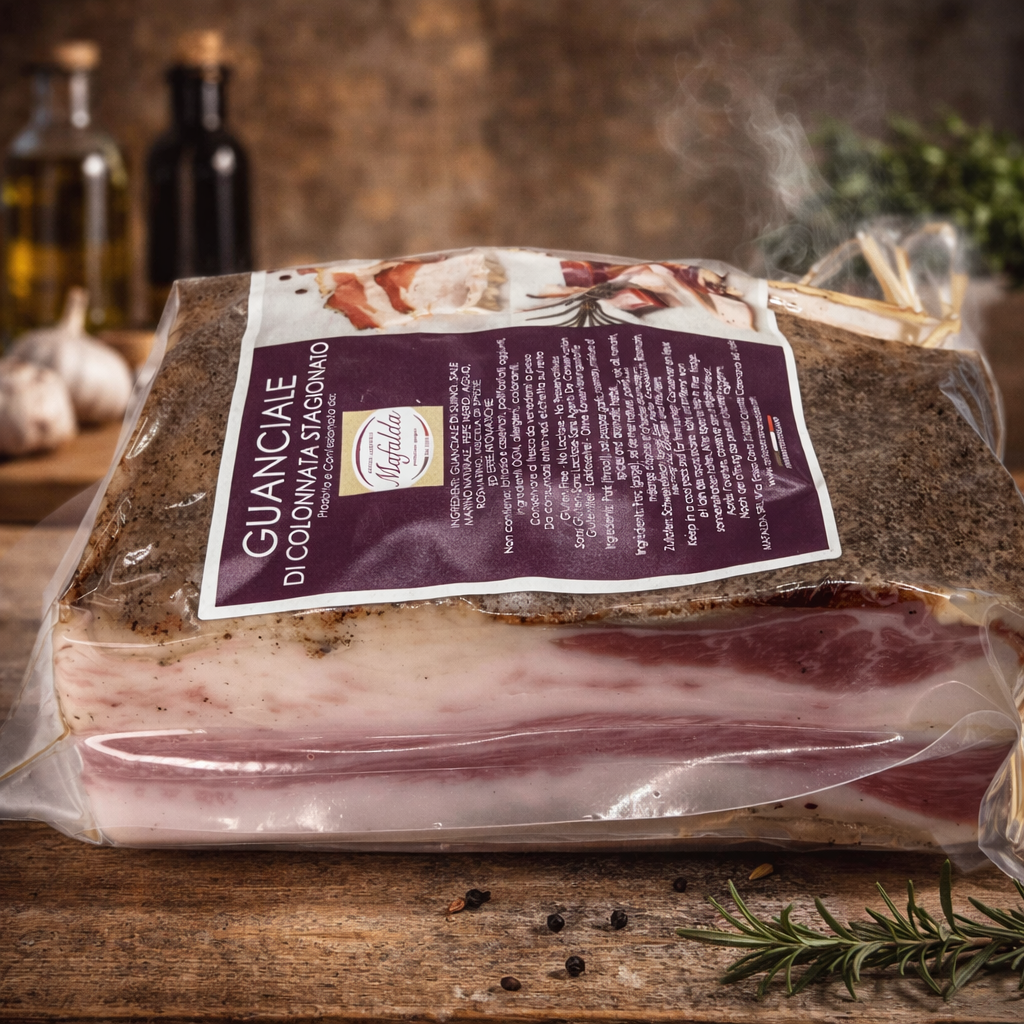
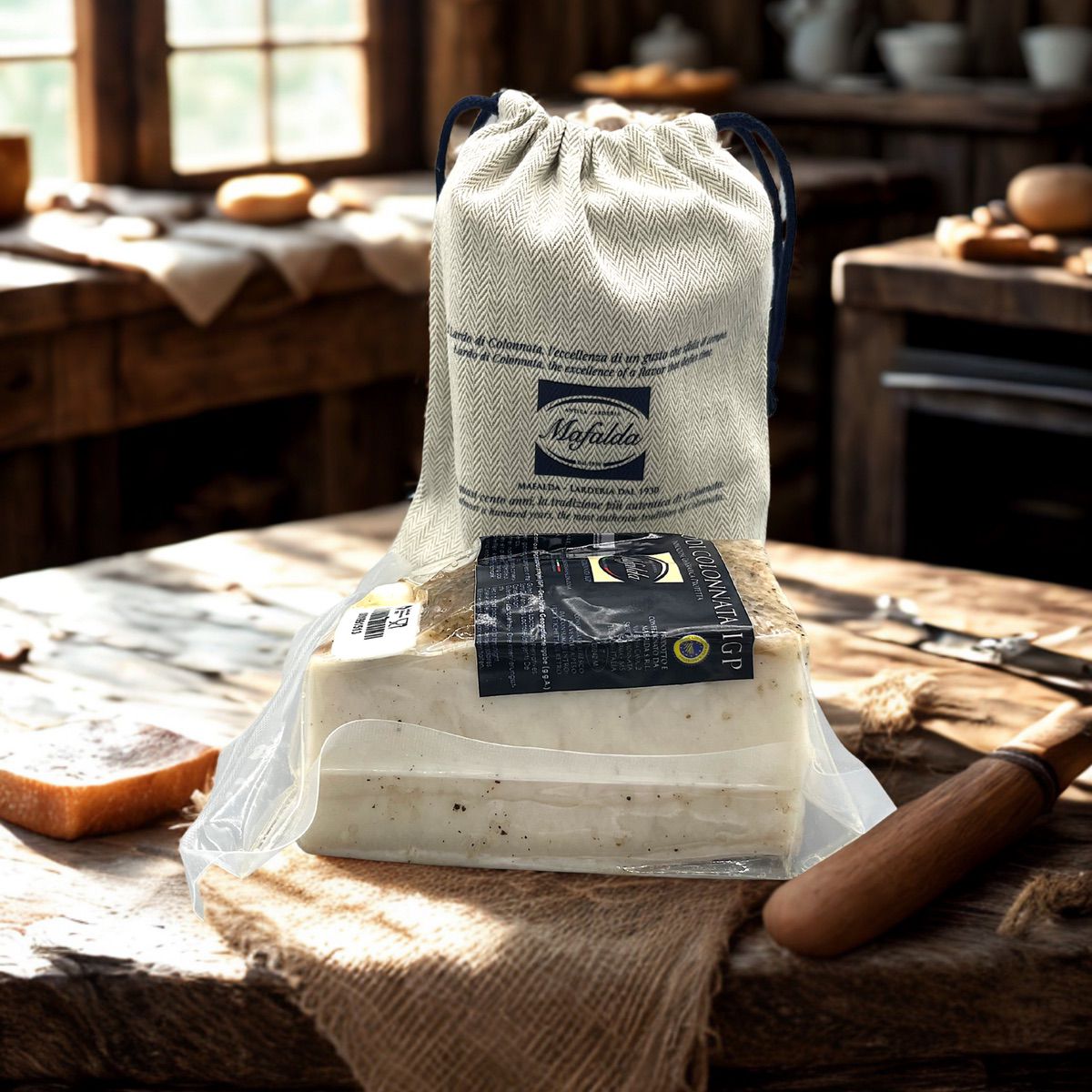
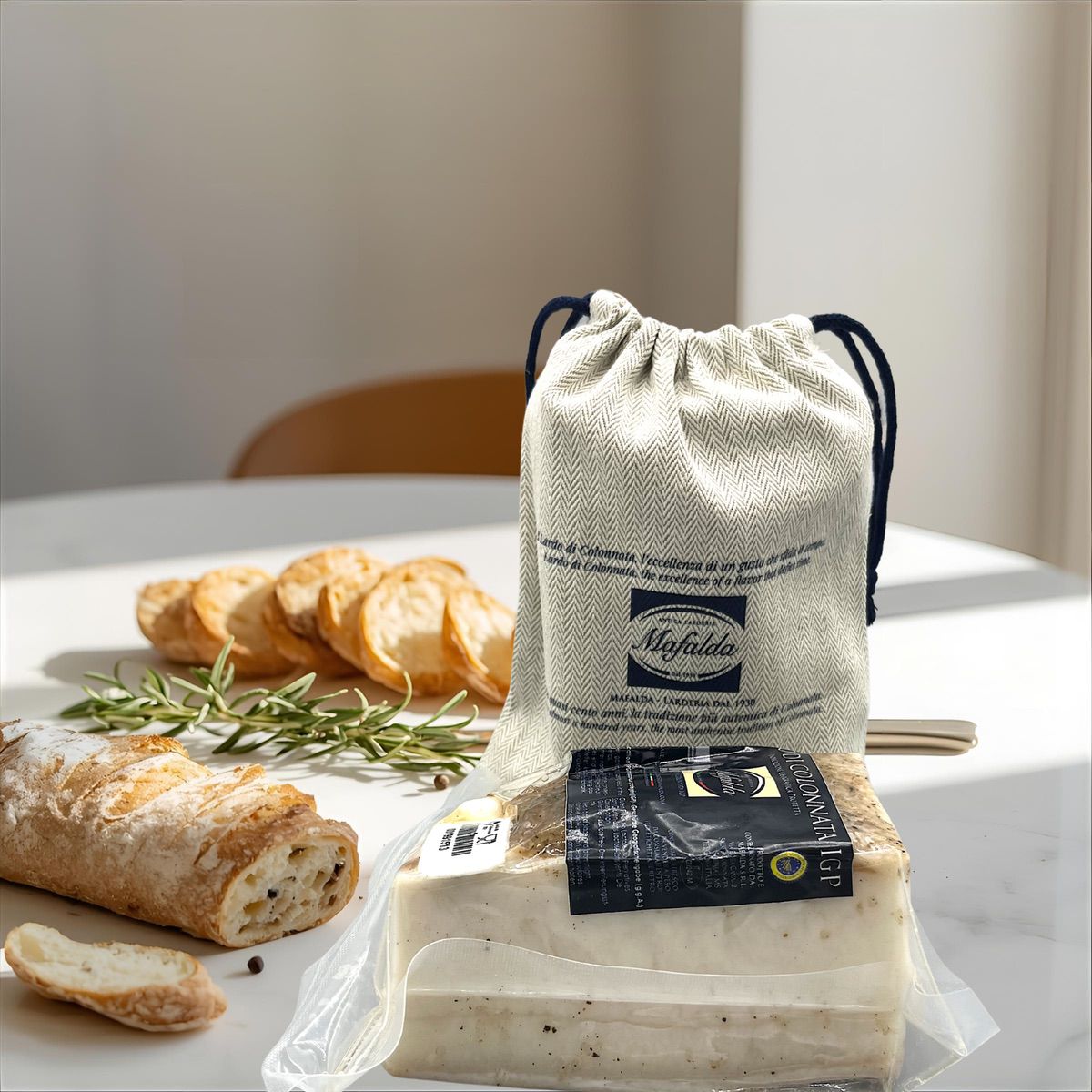
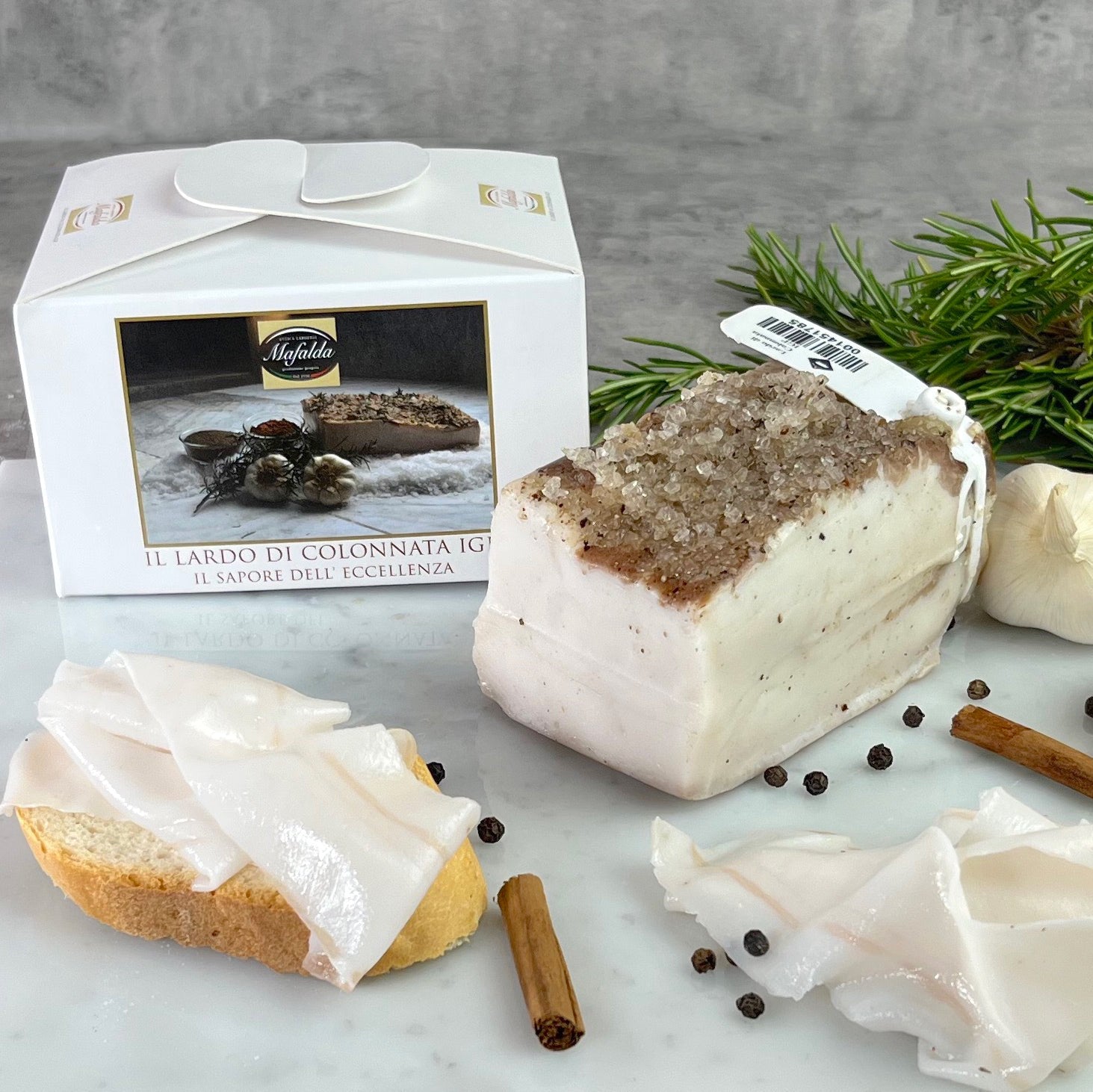
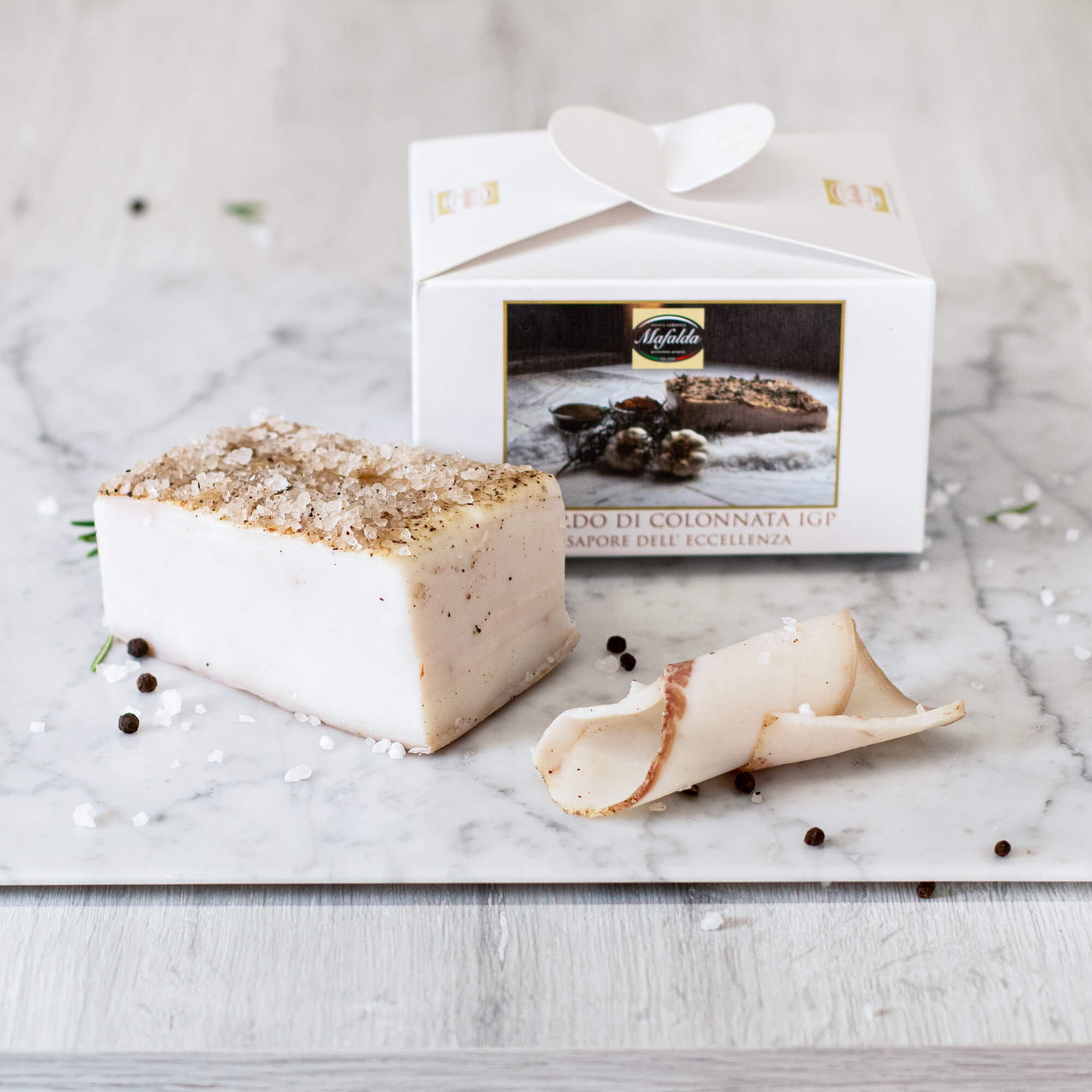
But be careful: color doesn't always tell the whole story. Some industrial pancettas have a higher fat content than they appear, while artisanal Colonnata guanciale , while visually fattier, contains more noble fats , such as monounsaturated fats, if derived from well-fed pigs and processed naturally.
Fat Quality: Not All Fats Are Equal
The question isn't just which has more fat, but also what type of fat . Guanciale has a high concentration of monounsaturated fats , including oleic acid, the same as that found in extra virgin olive oil. This makes it softer, more melt-in-your-mouth, and more aromatic. Pancetta contains a more balanced amount of saturated and unsaturated fats , but if it's naturally cured, like our Pancetta Stagionata di Colonnata , it also retains a good amount of healthy fats.
It's therefore wrong to think that one product is "better" in absolute terms. The key is the quality of the raw materials , the craftsmanship of the process, and moderation in consumption .
In the kitchen: yield, flavor and digestion
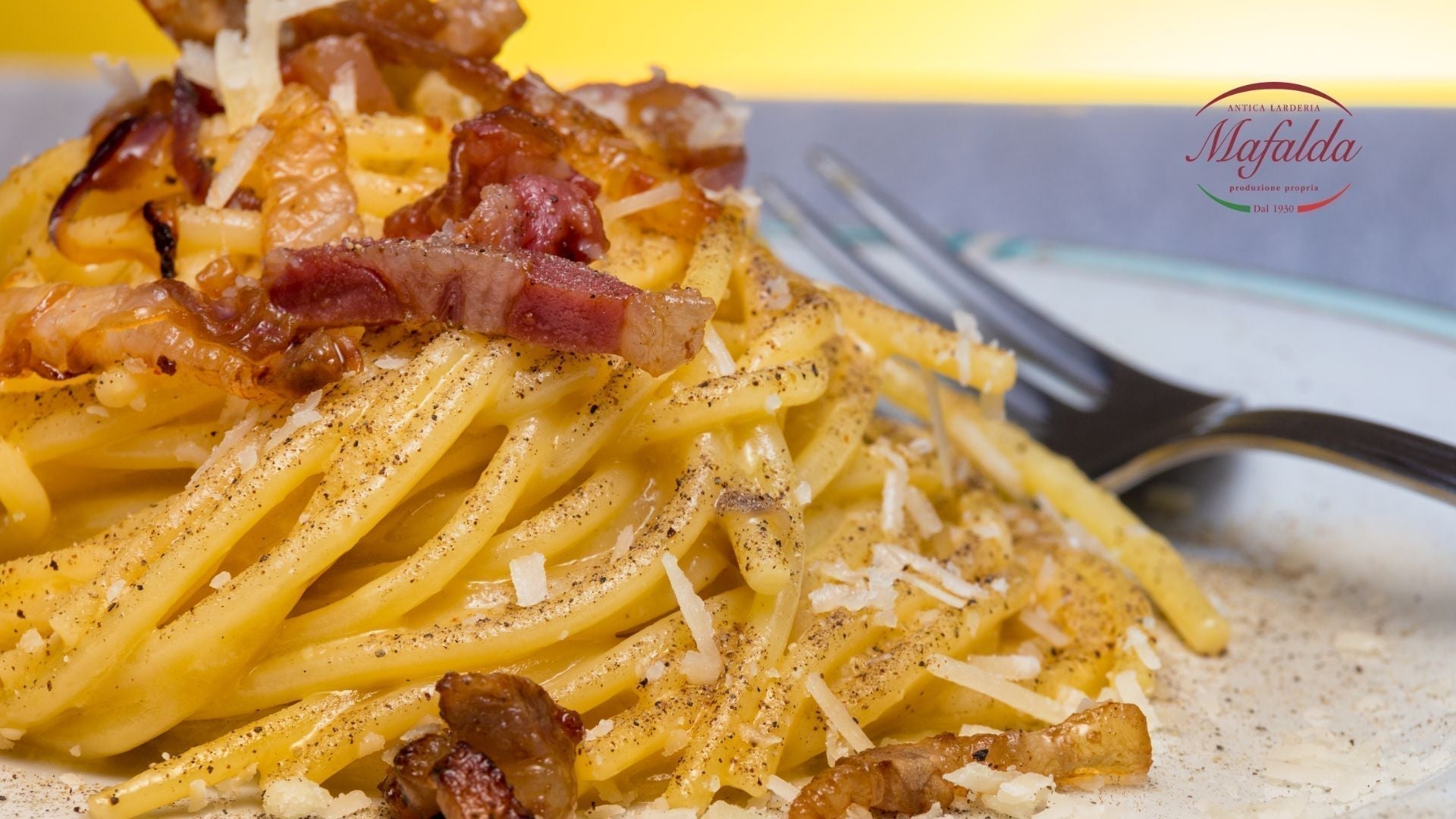
From a practical standpoint, guanciale is fattier but also more aromatic : it melts in the pan, creating a perfect base for dishes like carbonara, amatriciana, and gricia. Pancetta , especially the aged versions, has a more delicate flavor and can also be used raw , as an appetizer or paired with bread and cheeses. For an informed choice in the most famous recipes, also read the comparison between pancetta and guanciale in carbonara .
But there's another aspect to consider: digestibility . Very often, the noblest fats, such as those in well-seasoned guanciale or Colonnata pancetta, are lighter and easier to digest than the oxidized or altered fats found in industrial products. Slow maturing also helps reduce moisture and improve shelf life without preservatives .
So... who's fatter?
If we look solely at fat content, guanciale wins: it's on average fattier than pancetta. But if we broaden our focus to include the quality of the fat, craftsmanship, and culinary use, the answer becomes more nuanced.
Pancetta di Colonnata has a perfect balance of meat and fat, while cured Guanciale is a truly aromatic cream, ready to melt in the pan. Both have a distinct place in Italian cuisine, and fat content isn't the only criterion for choosing them .
If you'd like to learn more about the differences between pancetta and guanciale from a gastronomic, nutritional, and usage perspective, we have a dedicated article with all the details.
Conclusion
The question "which is fattier, guanciale or pancetta?" has a technical answer—guanciale is—but it must always be put into context. Different fats have different effects on the body and on the dish. Guanciale has more fat , pancetta has less, but it can be used in a wider variety of ways, especially when it comes to high-quality, artisanal products.
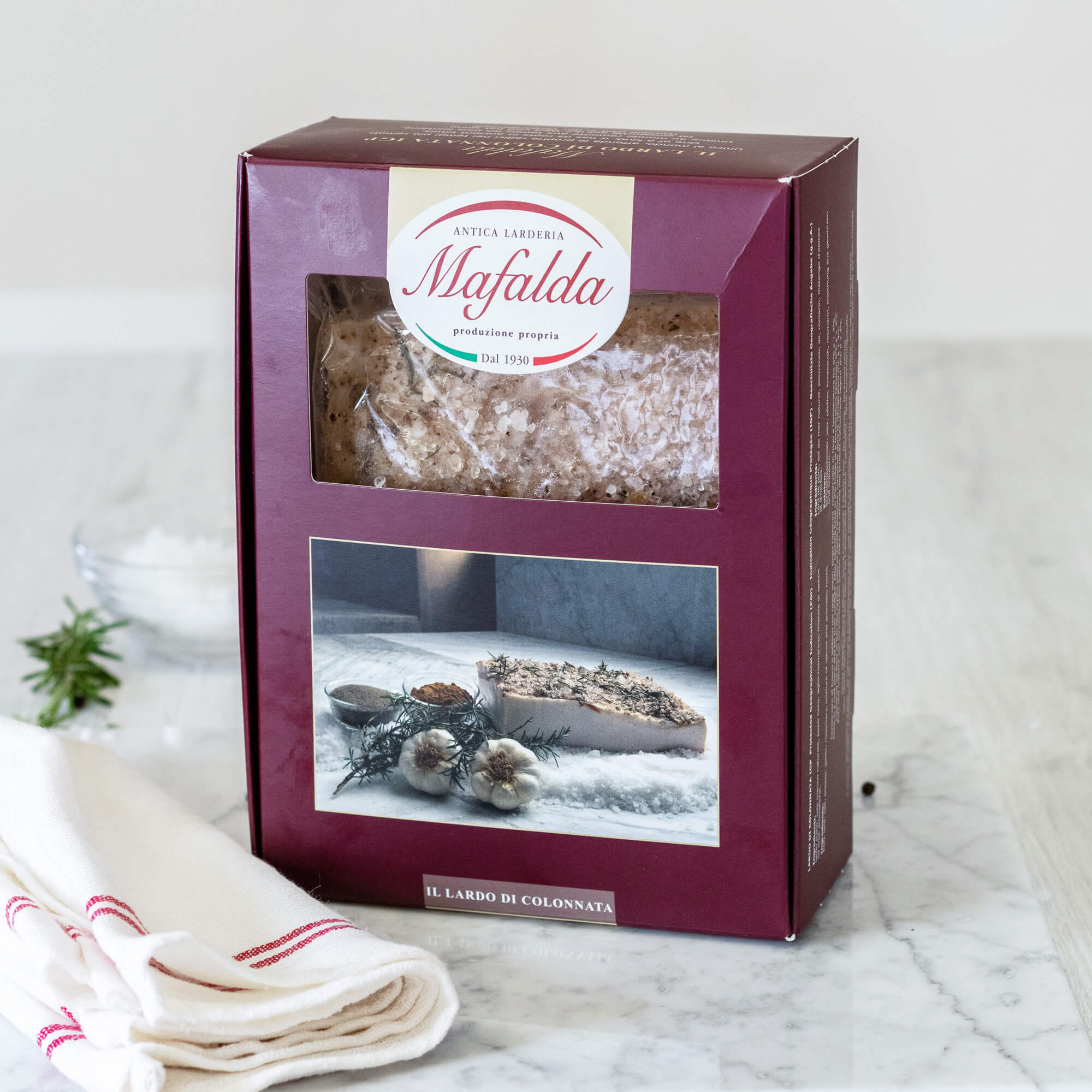
Ultimately, it's not about choosing the leanest, but rather the one best suited to your kitchen and your table . Luckily, thanks to the selection at Antica Larderia Mafalda , you can enjoy both specialties in their most authentic form.


Leave a comment
This site is protected by hCaptcha and the hCaptcha Privacy Policy and Terms of Service apply.