How is lard made? From salting to maturing in marble.
Lard is one of the oldest and most fascinating cured meats in the Italian tradition. But how is lard actually made ? What are the steps that transform a simple piece of pork fat into one of the most beloved gastronomic delicacies? In this article, we'll guide you through the artisanal processing of lard , from the initial cut to the curing process, with a special focus on what makes Lardo di Colonnata such a unique product.
From cutting to salting: the first step towards taste
The process begins with selecting a precise cut: the back of the pig, between the skin and the muscle, is used , known for its firmness and even thickness. This layer of fat is carefully trimmed and any imperfections are removed.
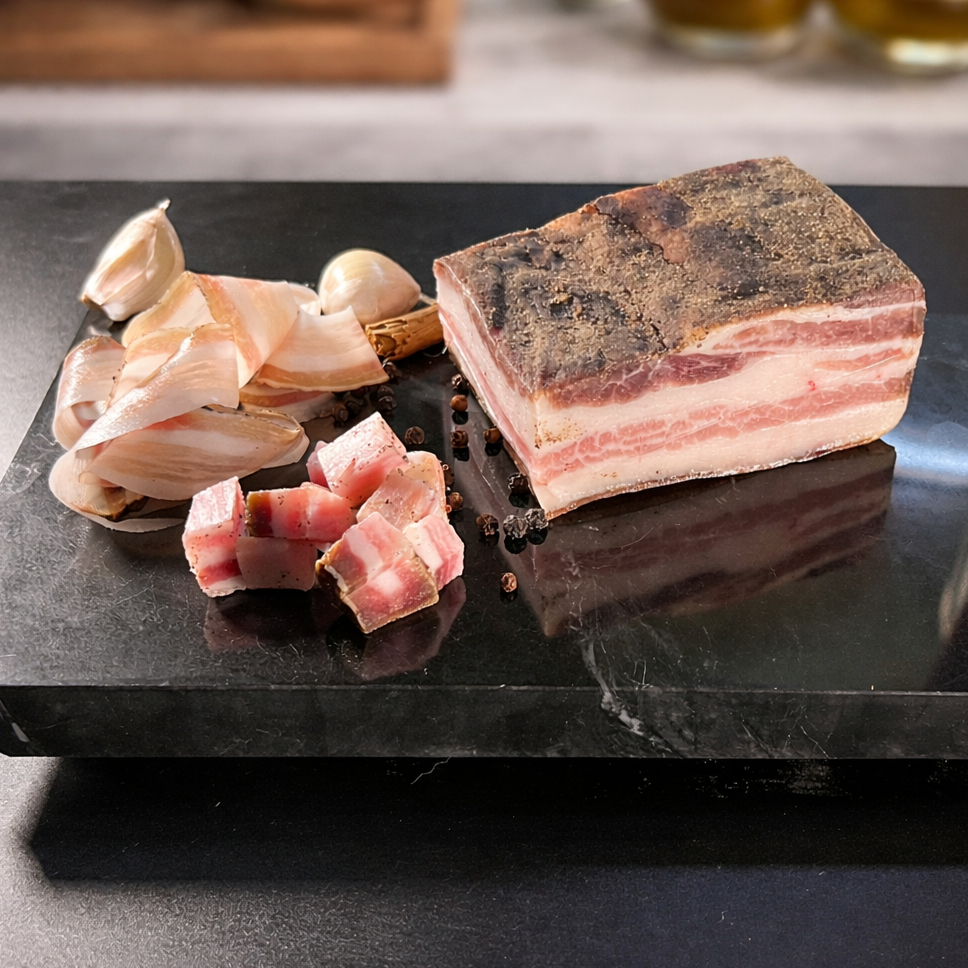
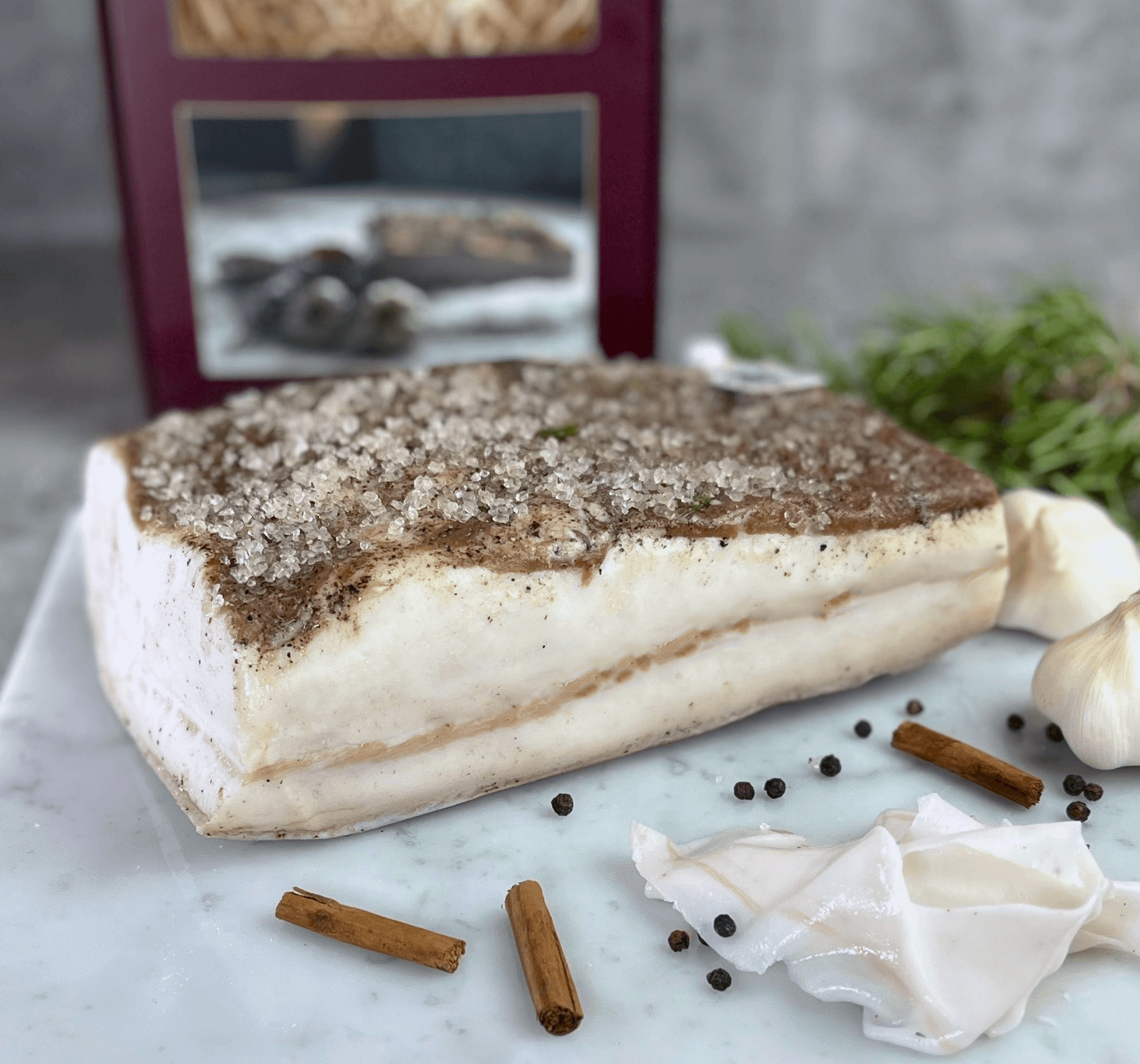
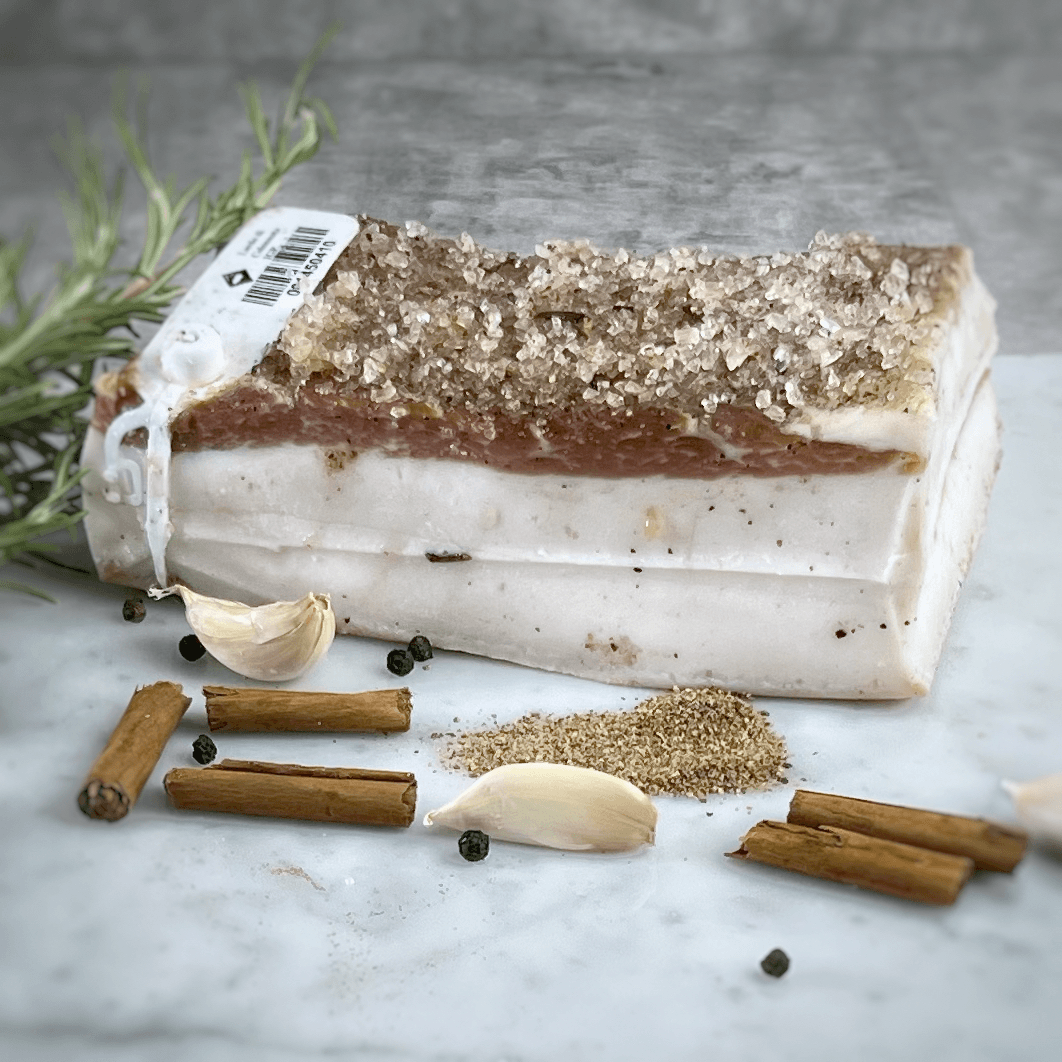
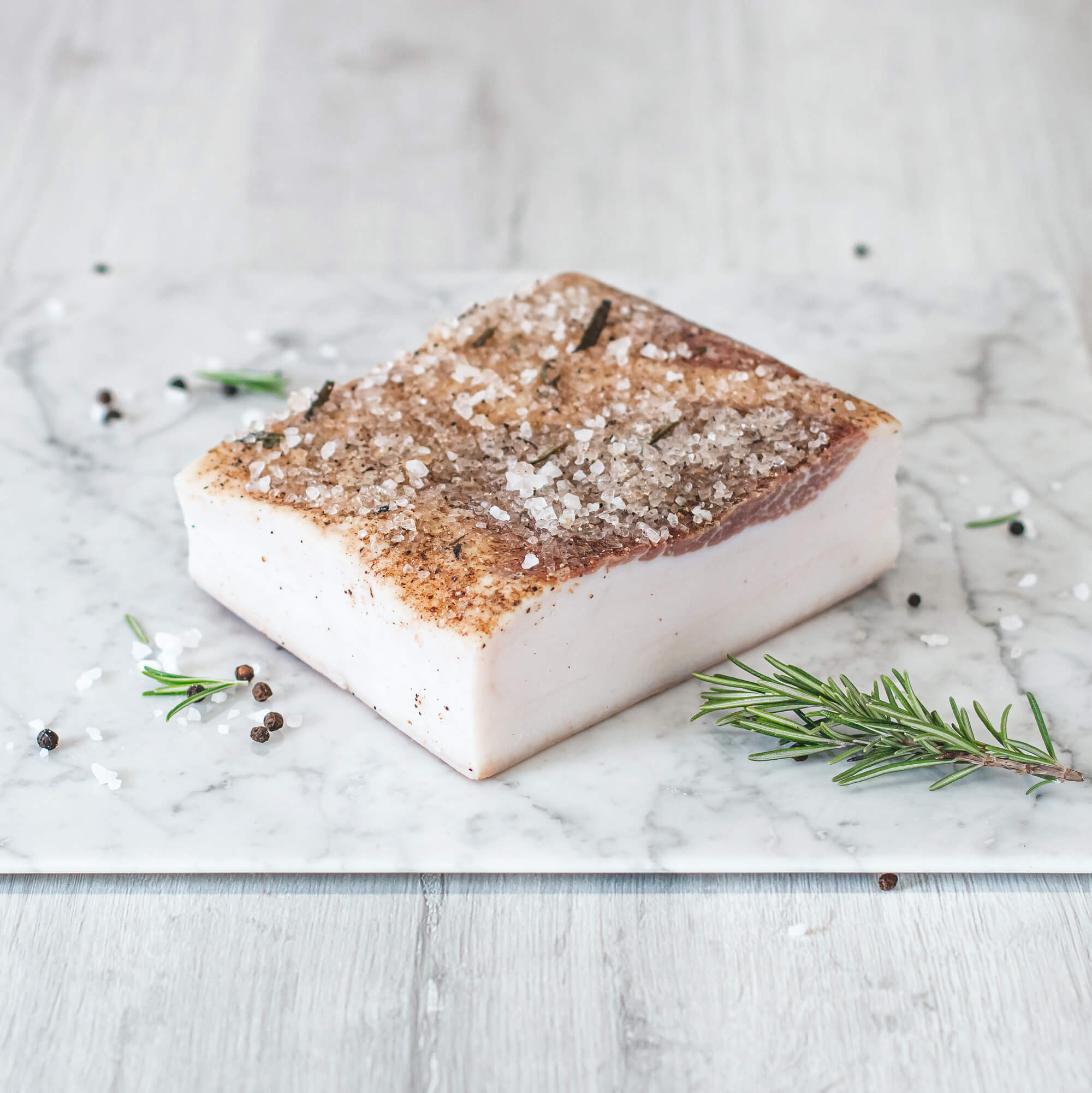
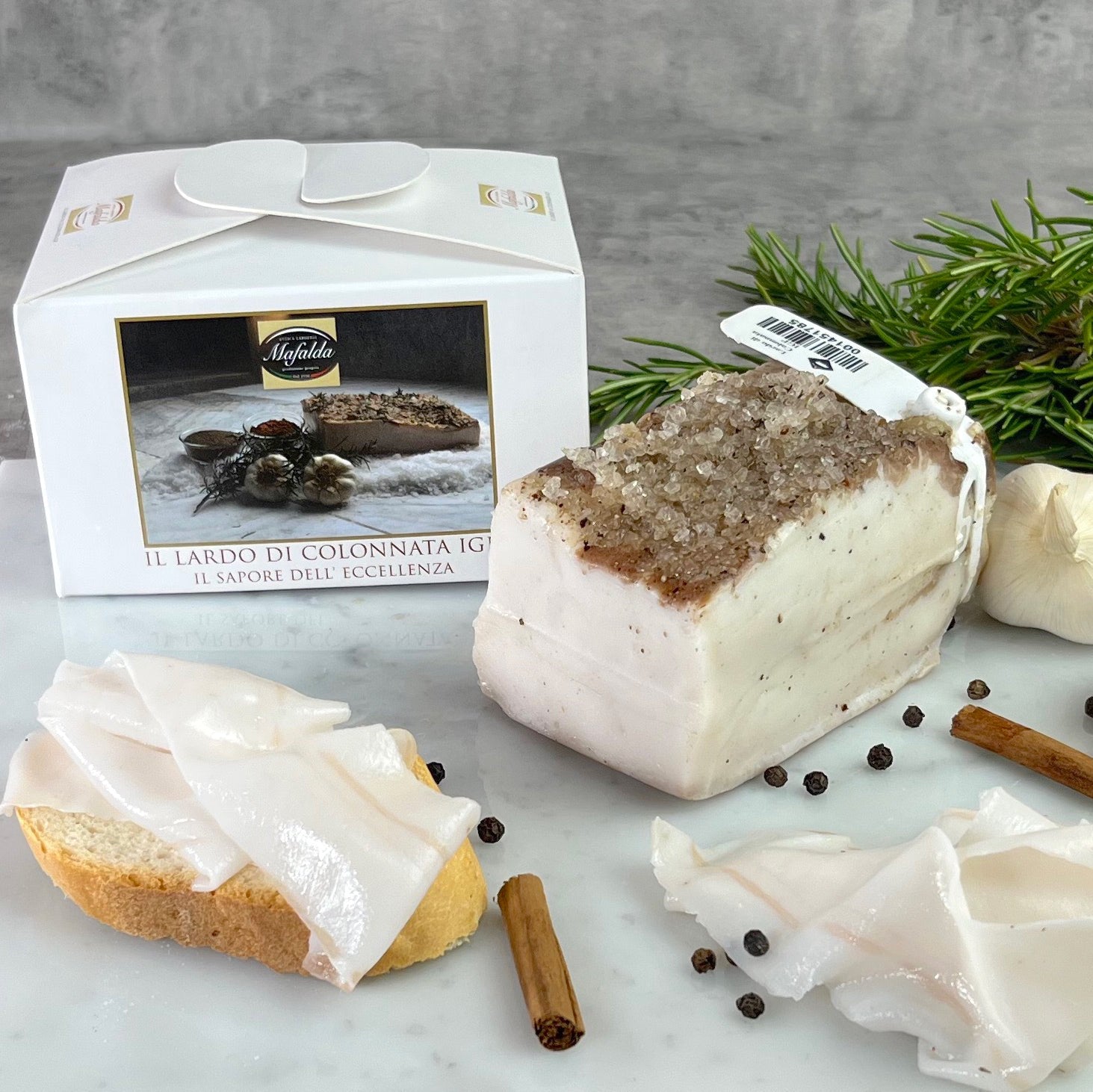
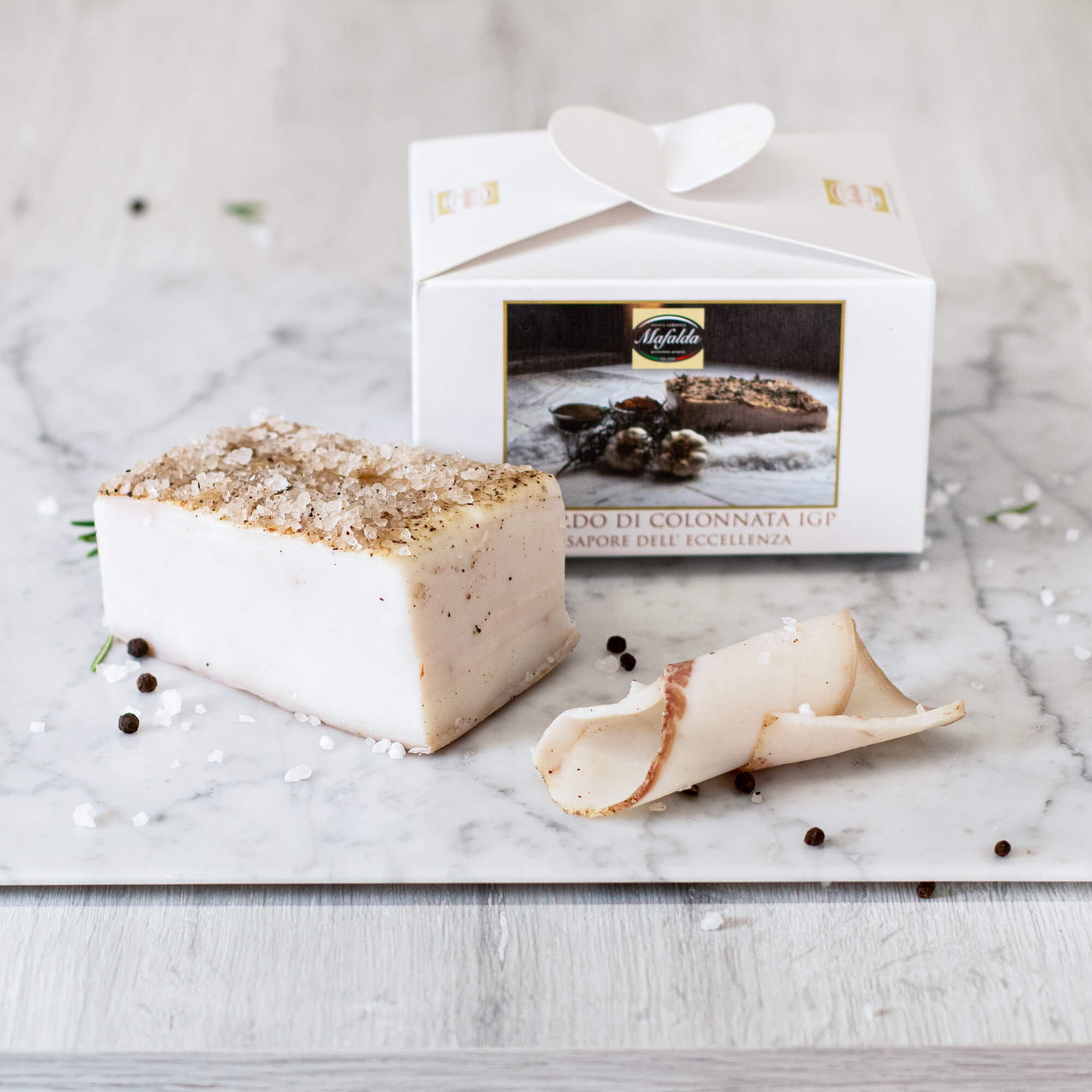
Once prepared, the lard is rubbed with coarse sea salt and flavored with fresh garlic, black pepper, rosemary, sage, and other herbs or spices, depending on local tradition. This step is crucial because it determines the aromatic base that will develop over time. Salting not only adds flavor, but also begins the natural preservation process , eliminating excess water and creating an environment hostile to bacteria.
In some productions, the lard is left to rest for a few days before being transferred to the curing tanks. At this stage, the slow transformation process that will lead to the complete maturation of the product begins.
Seasoning: wood or marble? The fundamental differences
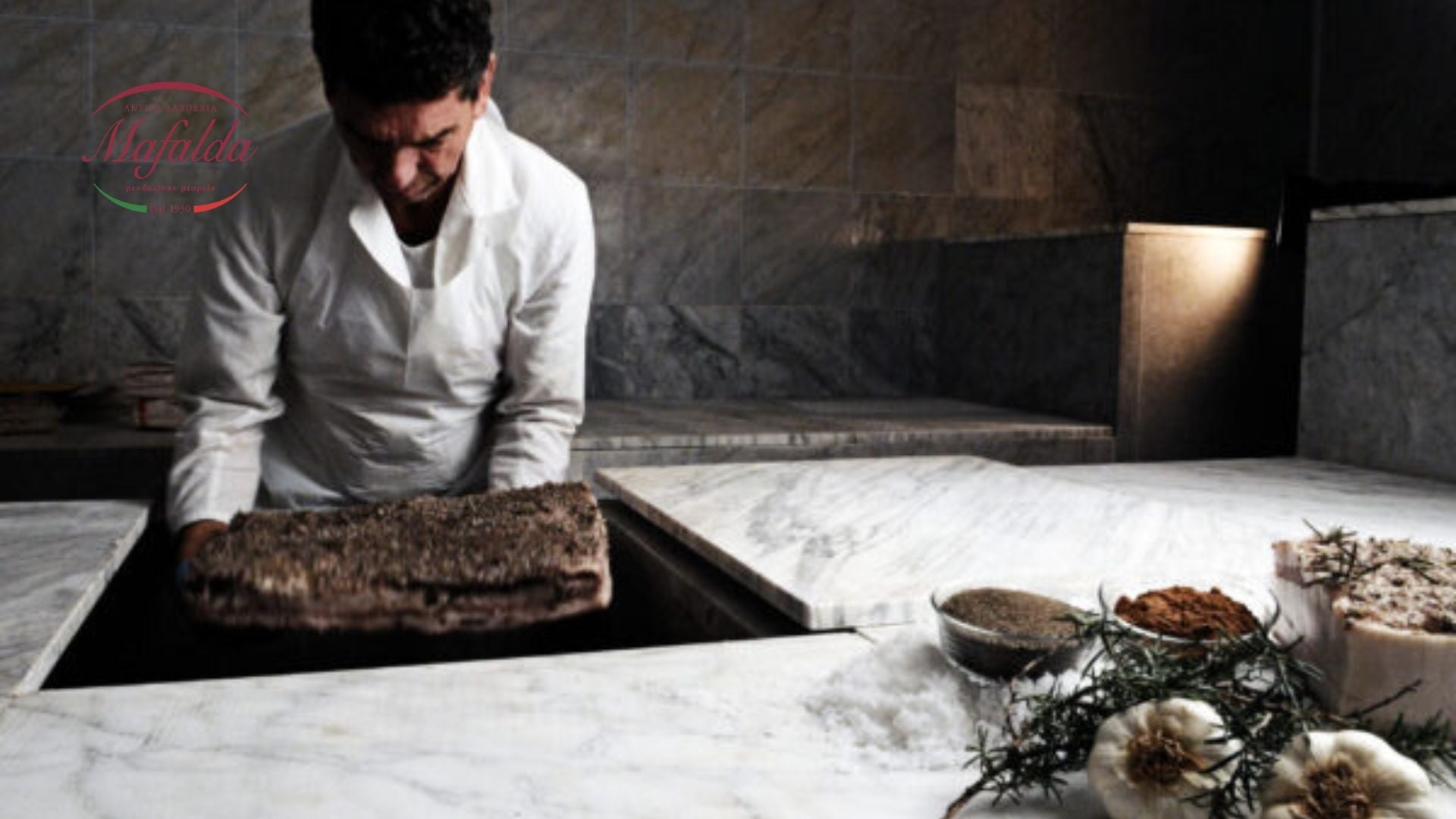
After salting, the lard is placed in curing tanks . In many Italian regions, wooden containers, such as chestnut or oak, are used, which allow for good transpiration and constant contact with the aromas. However, a much older and rarer technique exists: curing in marble basins, typical of Colonnata , in Tuscany.
The marble basins are hand-dug and rubbed with garlic to sanitize them . Inside, layers of lard and flavored salt alternate. Marble, a porous and thermally stable material, guarantees the perfect microclimate for long, controlled curing . Not only does it preserve the lard, but it interacts with it, allowing the flavors to slowly and evenly penetrate the fat.
The process can last from six to ten months , depending on the climate and the producer's expertise. The result is a soft, fragrant, delicately flavorful, and highly digestible product. If you'd like to learn more about the history of lard and its regional variations, we've dedicated an entire article to the topic.
Why is Lardo di Colonnata so special?
Lardo di Colonnata is the only lard in Italy —and probably the world—with an aging method so closely tied to its terroir. The Carrara marble quarries are not just the backdrop, but the living material that makes this unique process possible. Colonnata's microclimate , with its natural humidity and pure mountain air, creates the ideal conditions for slow and even aging.
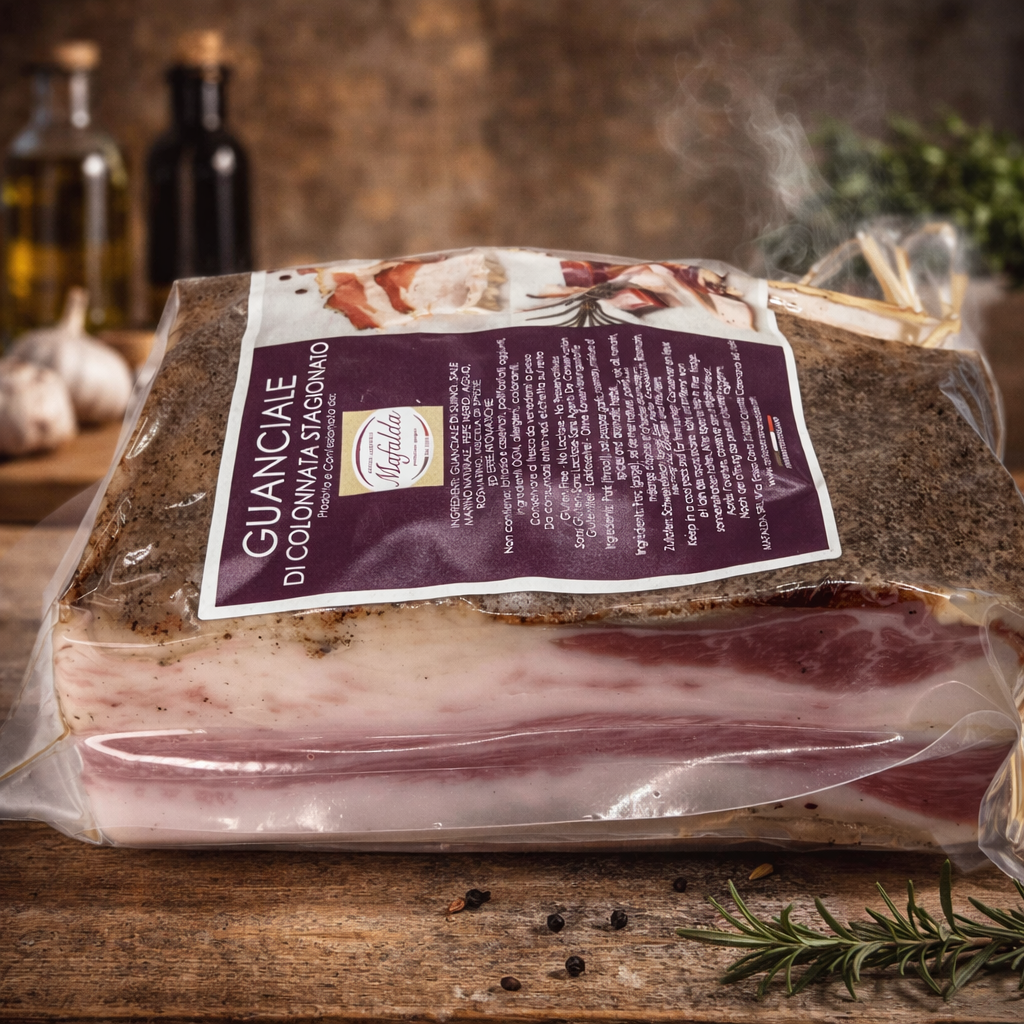
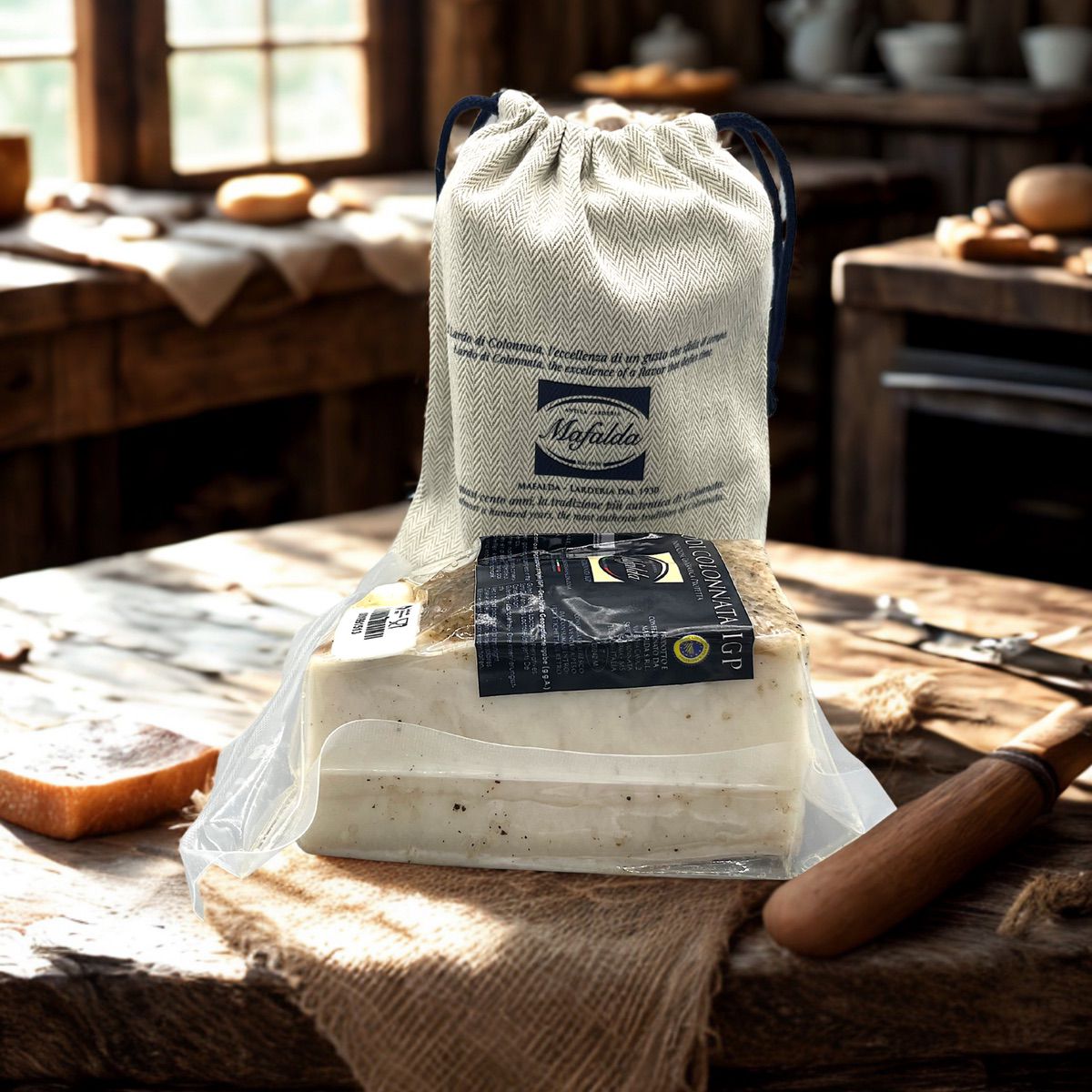
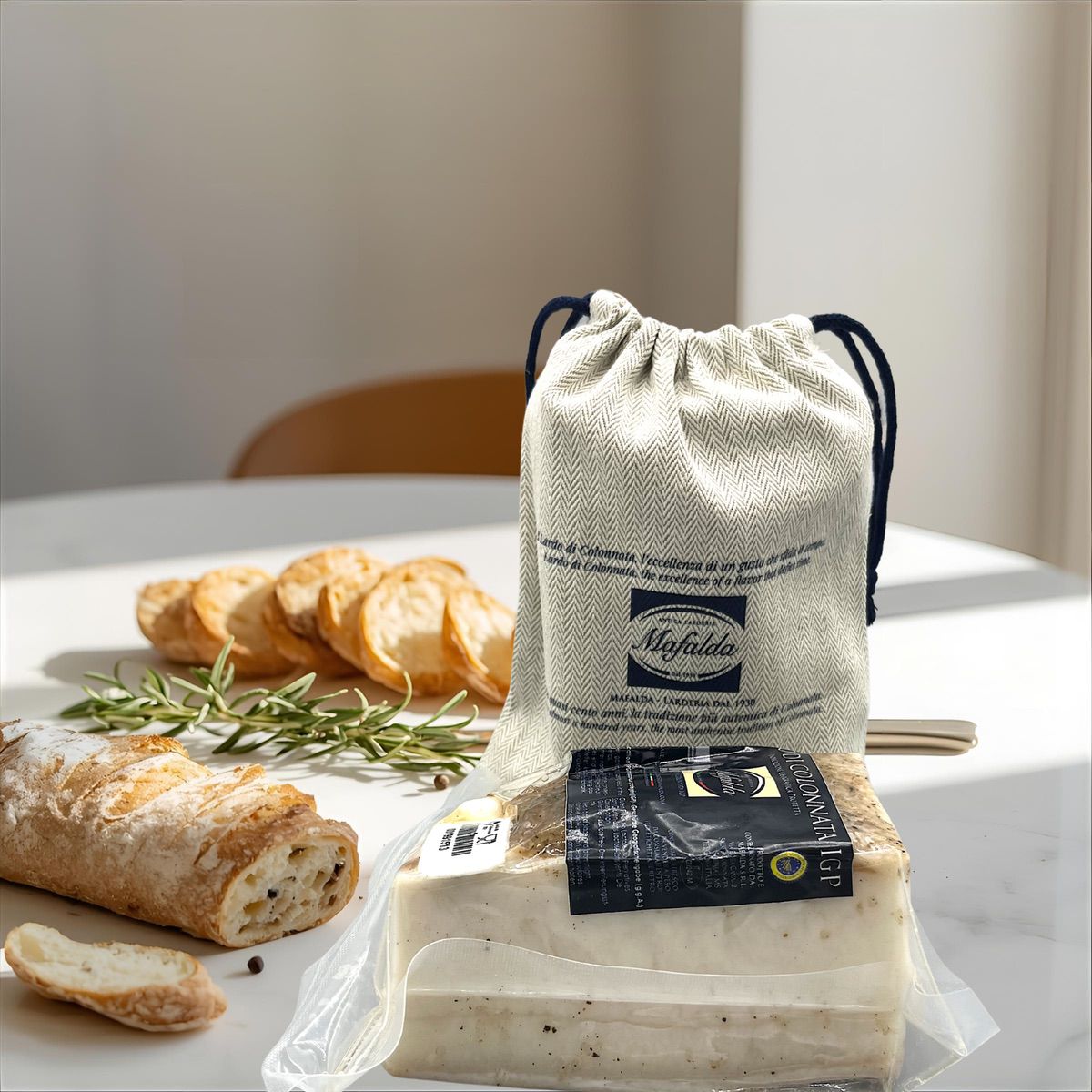
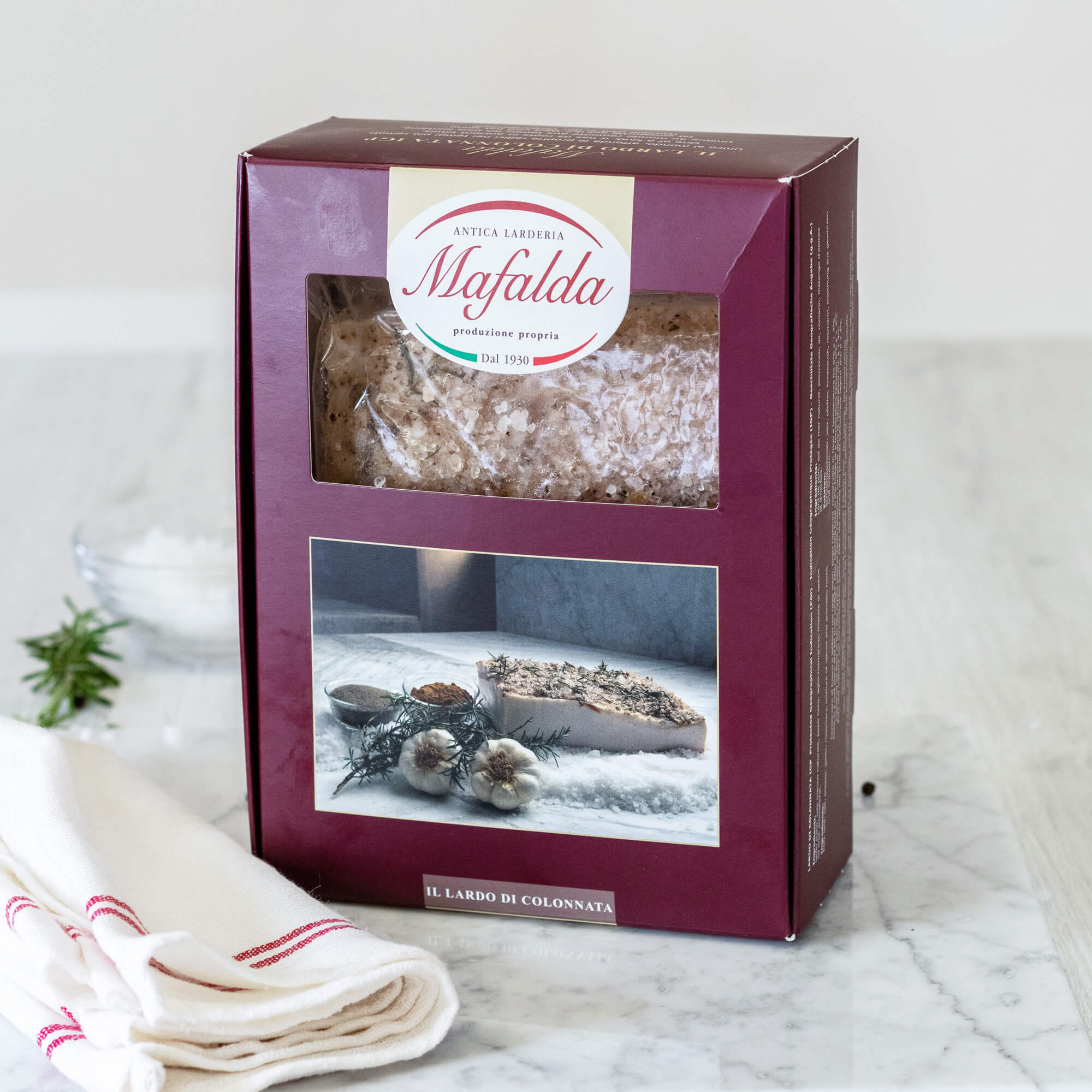
In 2004, the European Union recognized this method with the PGI designation , protecting traditional production and certifying the quality of a product that is still handmade today. Among the producers most faithful to tradition, Antica Larderia Mafalda is among the most highly regarded. Thanks to a passion passed down from generation to generation, it offers specialties such as the 700-gram Lardo di Colonnata , prepared according to ancient local recipes.
From curing to the table: the pleasure of authentic lard
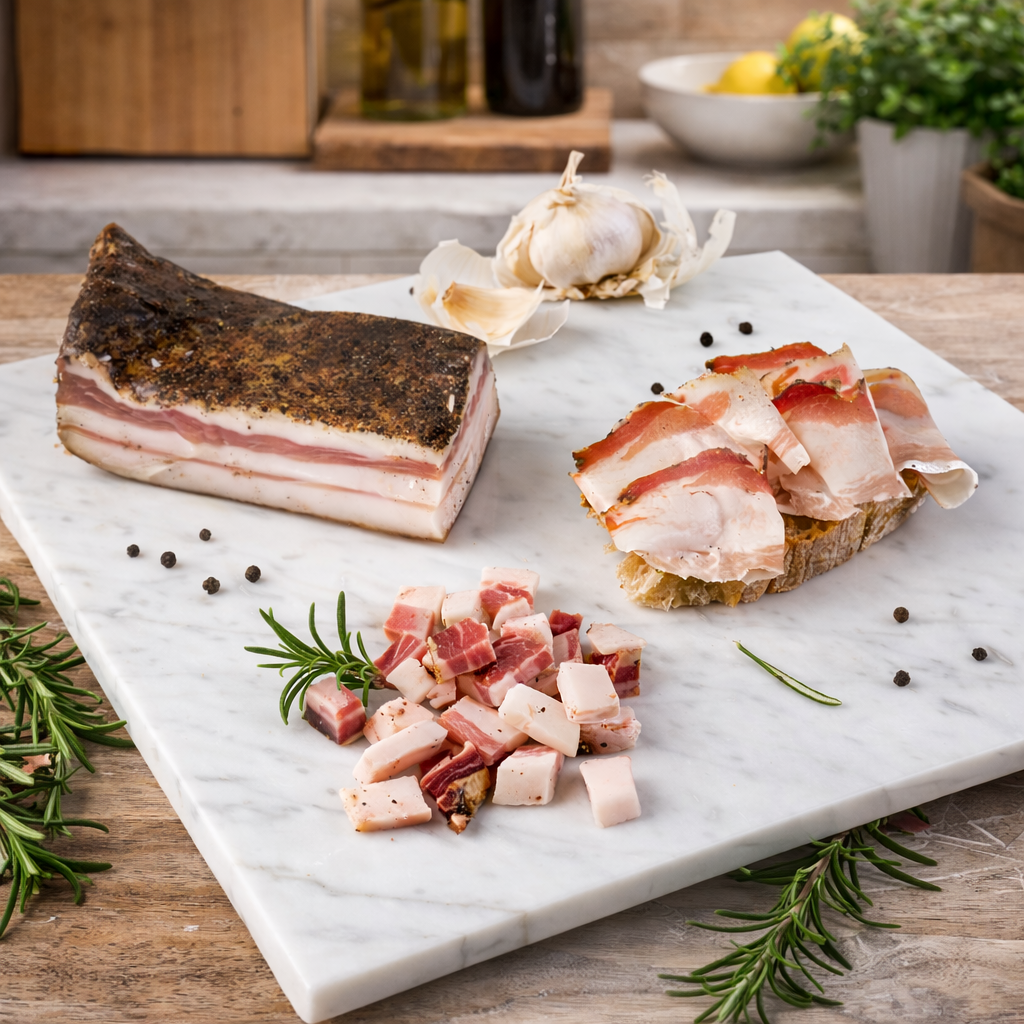
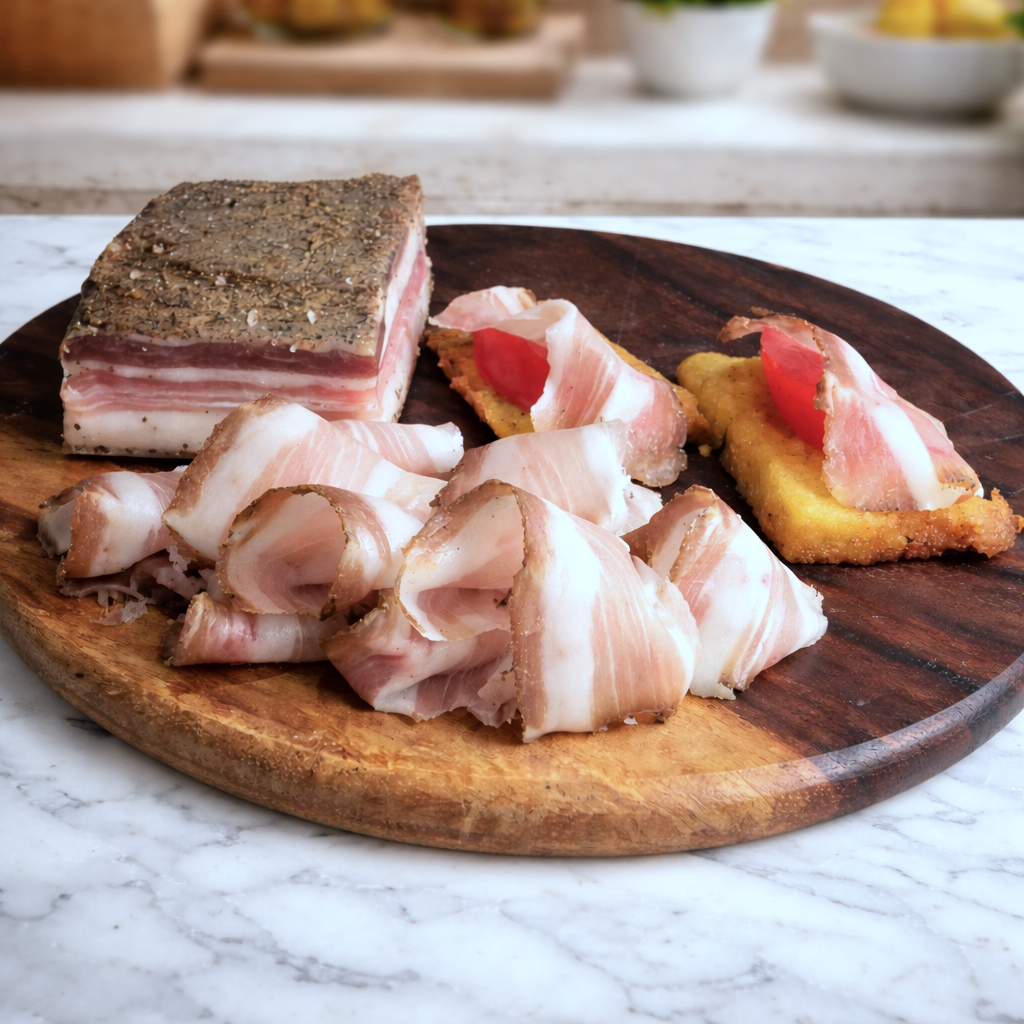
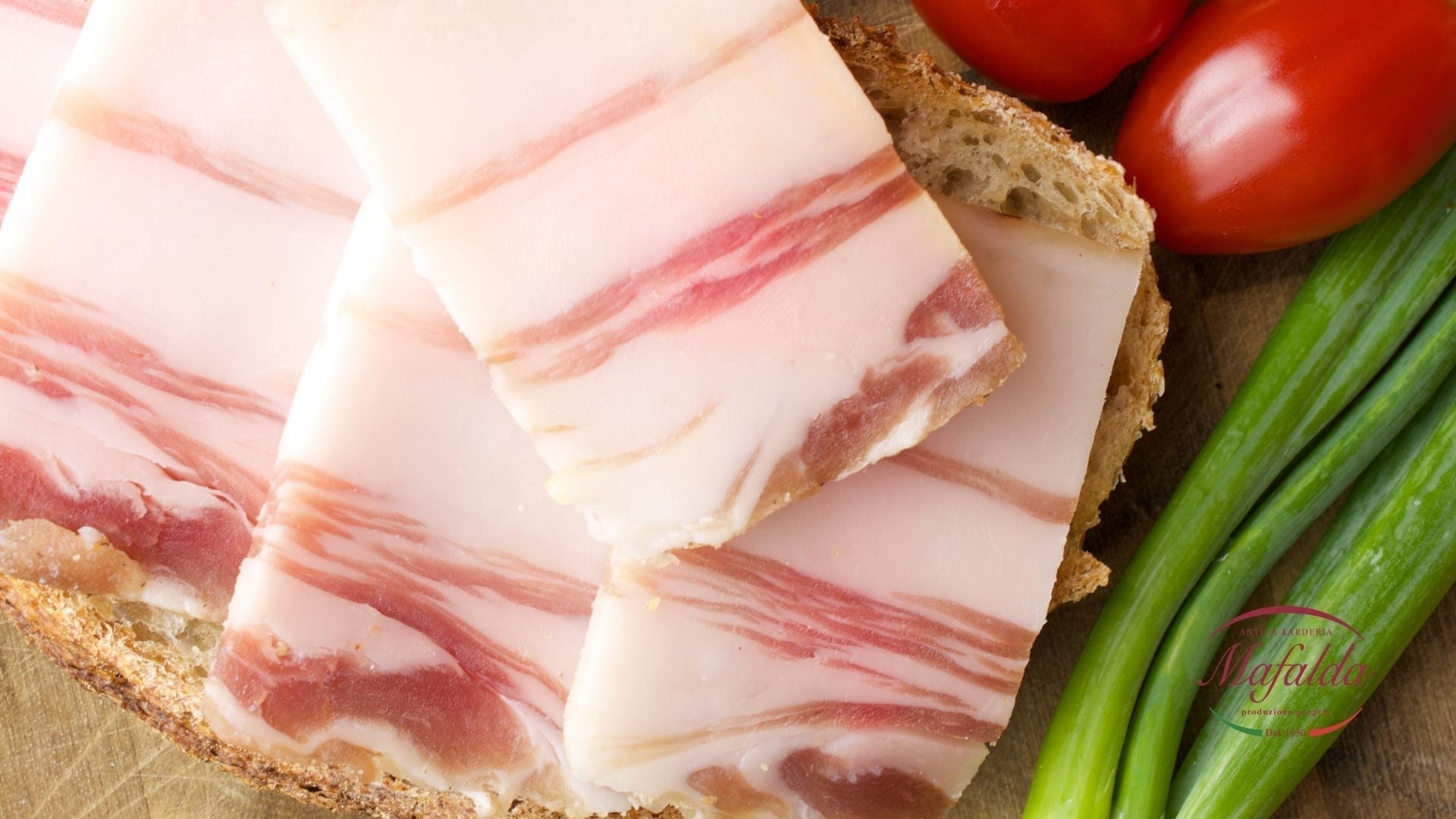
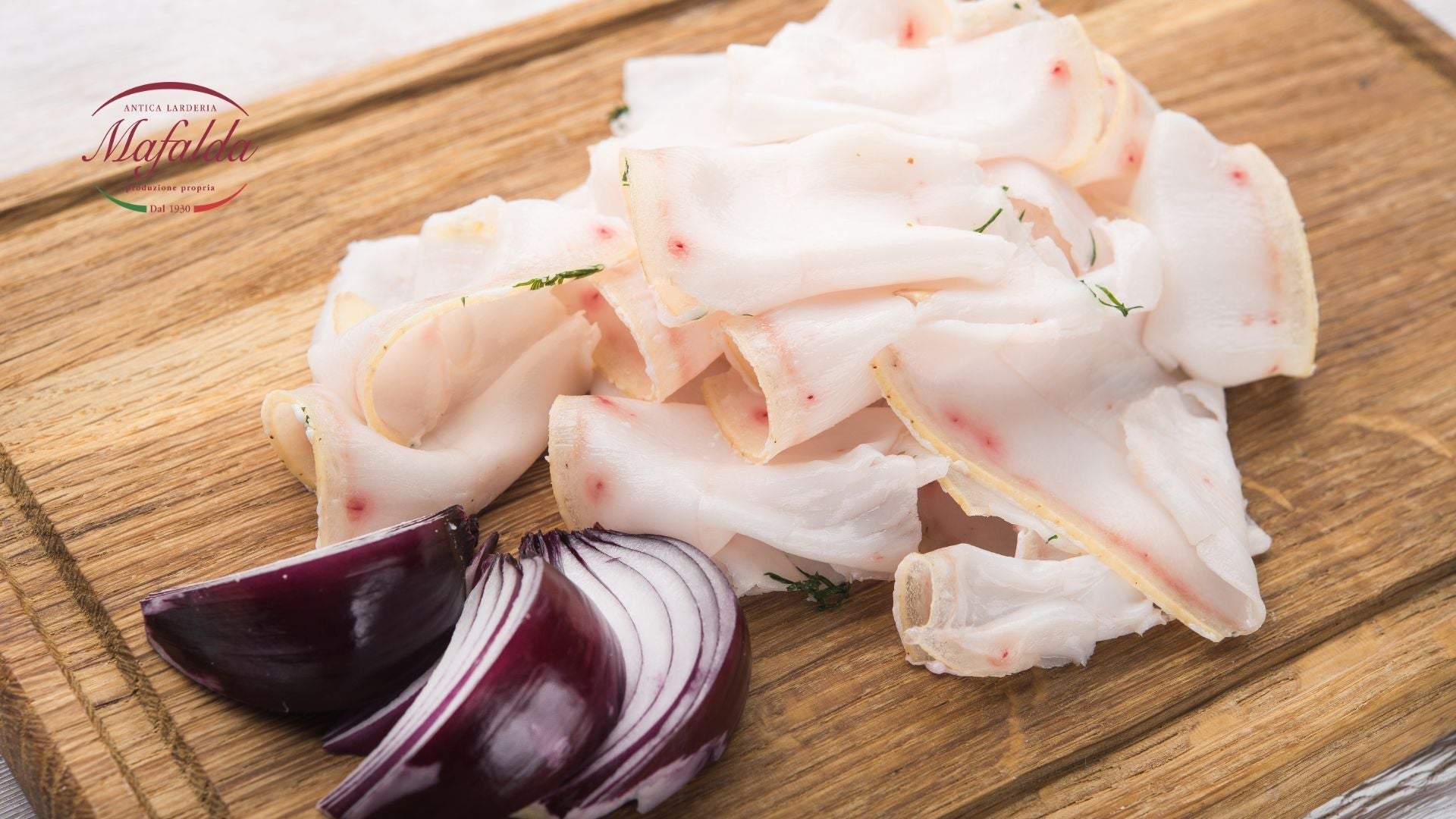
Once the curing process is complete, the lard is removed from the basins and cut into blocks , ready to be sliced and enjoyed. The thin slices literally melt when they touch the warmth of toasted bread or a hot dish. It is precisely at this moment that all the aromatic complexity developed over the preceding months emerges.
Anyone who tastes real Lardo di Colonnata will never forget its velvety texture and delicate flavor . But beyond its deliciousness, it's important to remember that it also has interesting nutritional properties when consumed in moderation. It's rich in healthy fatty acids and, in small quantities, can be included in a balanced diet.
Discovering how lard is made is a way to truly appreciate its value: not just a cured meat, but a tale of land, time, tradition, and craftsmanship. And if you want to bring this excellence to your table, trust those who carefully preserve it every day .


Leave a comment
This site is protected by hCaptcha and the hCaptcha Privacy Policy and Terms of Service apply.